 In production
Forgeline
From requirement to reviewed PR, governed end to end
Agentic workflow
Forgeline
From requirement to reviewed PR, governed end to end
The code lives in a private repository; this sheet and the demo, when there is one, show the work.
Draft. Written from the program notes and pending the author’s review.
- Status
- In production
- Type
- Agentic workflow
- Running since
- March 2026
- Role
- Architect and sole engineer
- Domains
- software delivery, agents
- Cast
- Python, Claude Code, GitHub Actions, LangGraph
Context and problem
Turns a feature request into a reviewed pull request: DDD spec, hexagonal code, tests and a security audit.
Turning an approved requirement into a reviewed pull request still takes days of hand-offs between people and tools (assumption documented in the repository).
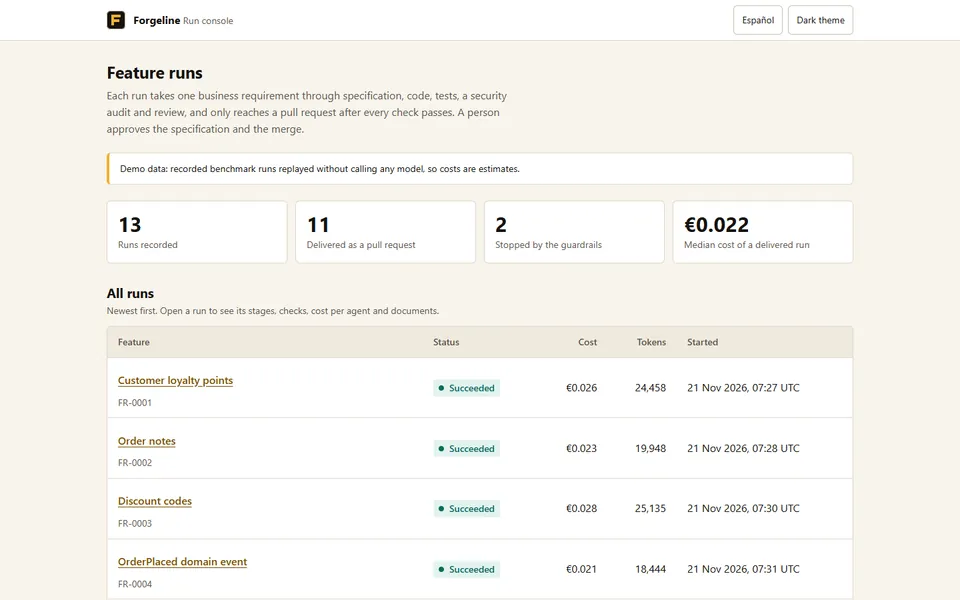
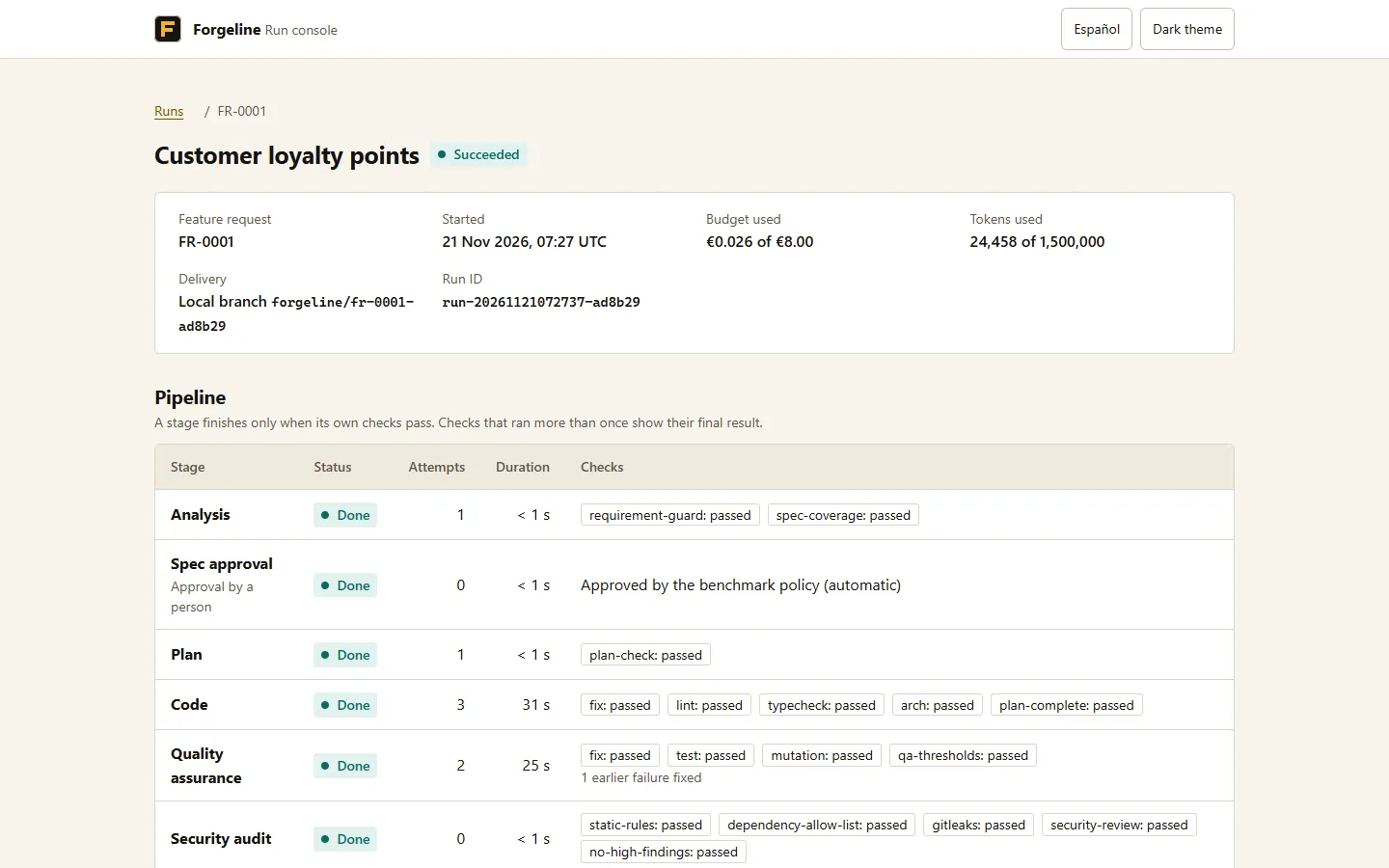
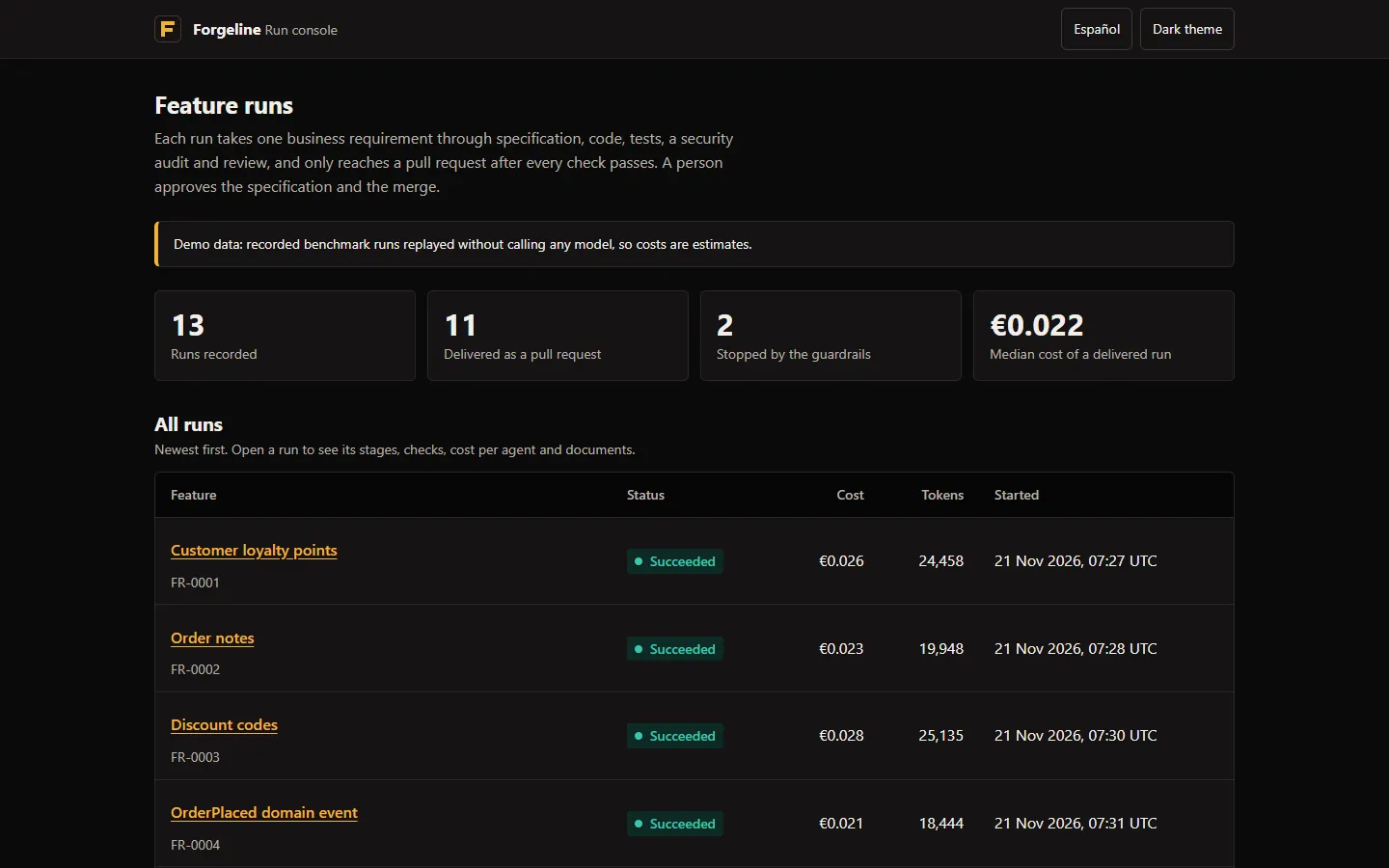
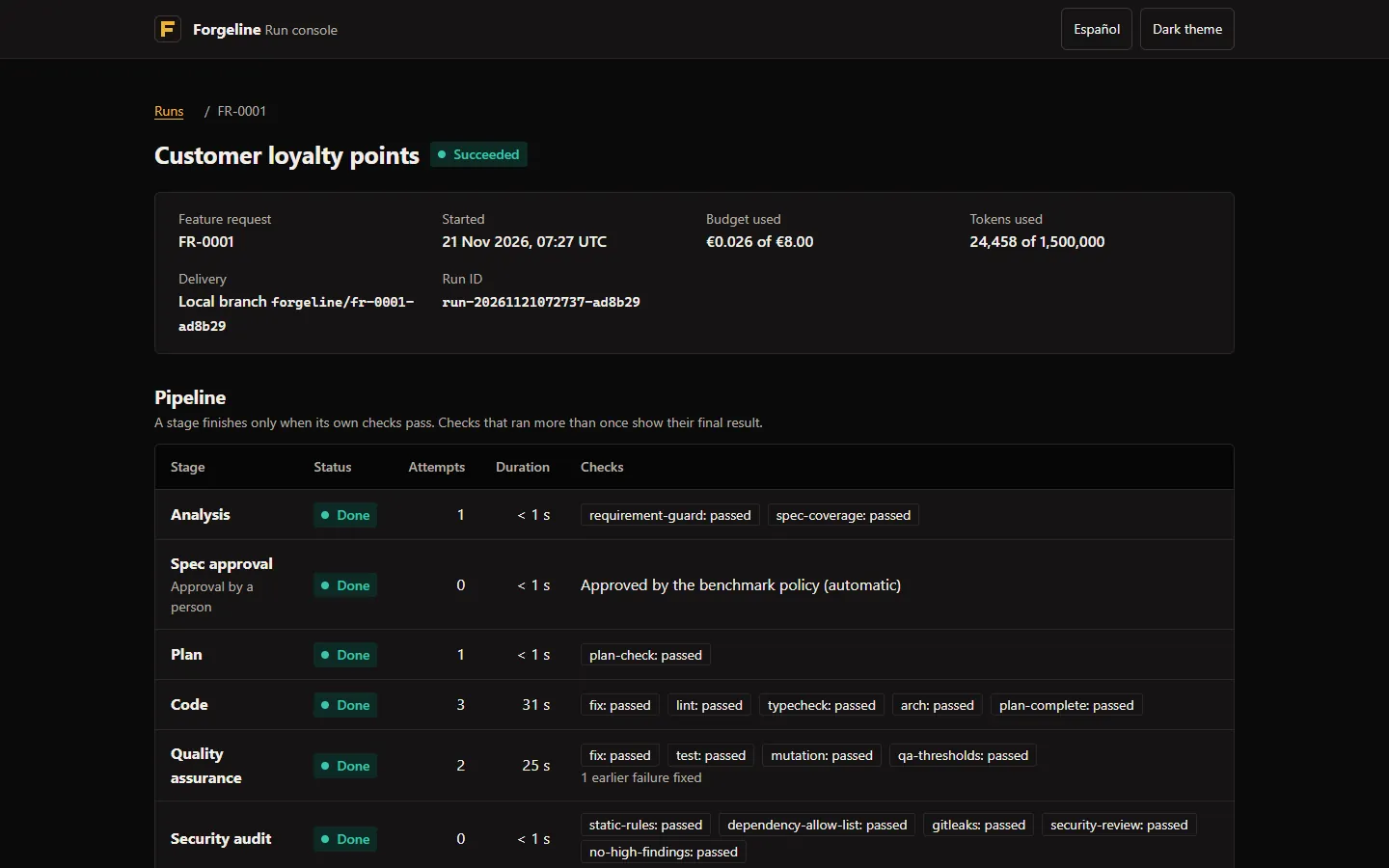
Screens
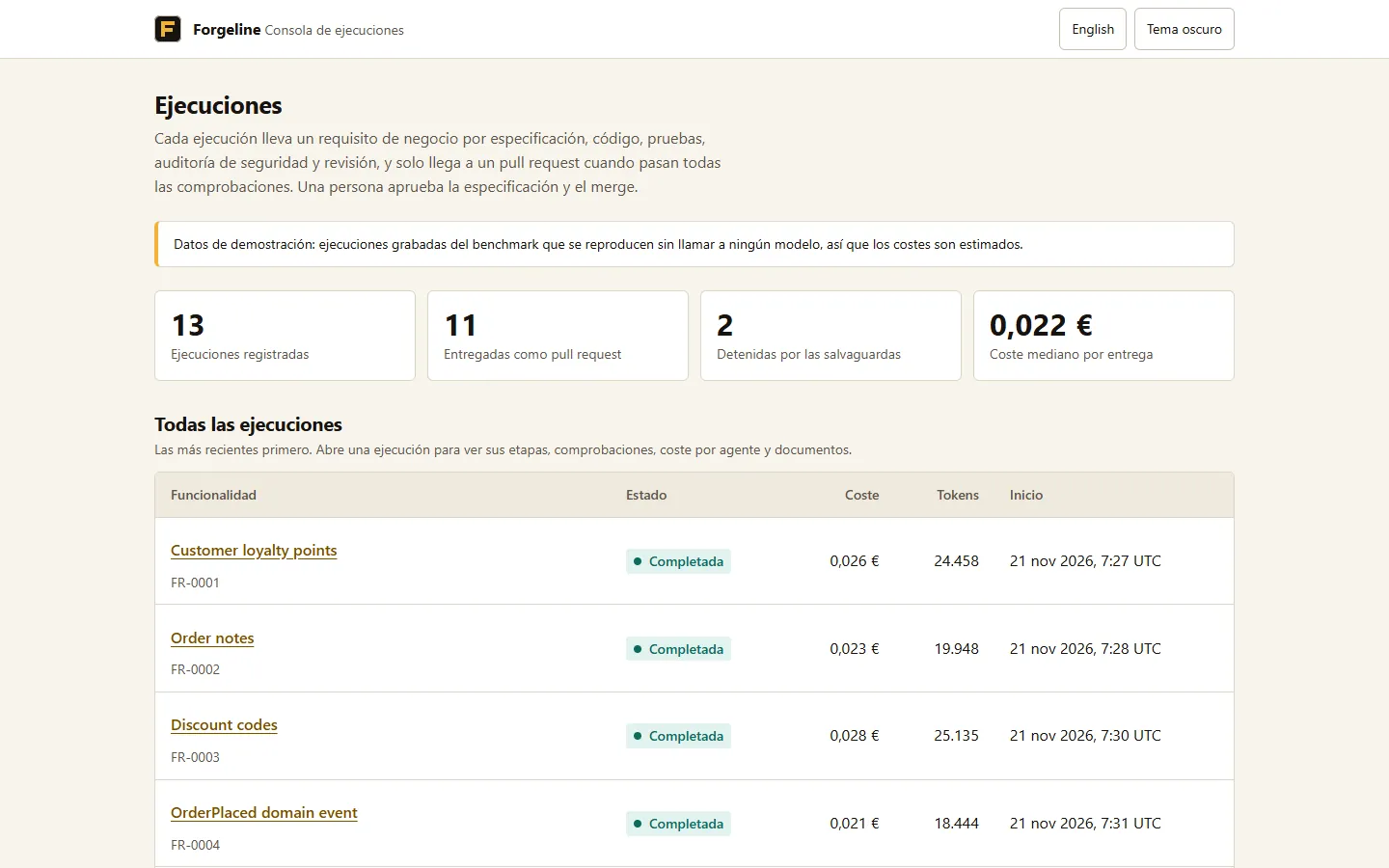
How it was built
Built in 3.3 h · USD 72.54 of AI · 110 tests · 4 audits
Source: Trysac/03-forgeline docs/development-report.md (lines 10, 12, 65), dated 21 November 2026.
Architecture and interfaces
- Provides
- events pr.*, api forgeline-api
- Consumes
- mcp specgate (specgate)
- Shared keys
- spec_ref, pr_ref
Results with dated evidence
Outcomes as stated in the manifest; the measured figures are the ones with a date.
- Requirement to reviewed pull request without a manual hand-off, behind human approval
Case study in preparation
The full case study adds these sections when it is published:
- Constraints
- Architecture diagrams (C4 context and containers)
- Three key decisions
- What went wrong
- Demo video
- What I would do differently
In the project mesh
- Specgate, zero effort: interface specgate provided by one and consumed by the other
- Resolvo, low effort: shared resources llm-gateway; a standard interface exists
- Revela, low effort: shared resources llm-gateway; a standard interface exists
- Sublingua, low effort: shared resources llm-gateway; a standard interface exists
- Vigilo, low effort: shared resources github; a standard interface exists
Highlights
durable agents, human in the loop, spec driven